 Dr. Nikhil’s Dental Clinic & Implant Center
Tooth pain troubling you in Panipat or nearby areas?
Get safe, painless root canal treatment in Panipat at Dr. Nikhil’s Dental, a trusted dental clinic for tooth pain relief and infection treatment.
Painless root canal treatment in Panipat is now comfortable, safe, and highly effective. At Dr. Nikhil’s Dental Clinic in Panipat, we provide modern root canal treatment to relieve tooth pain, remove infection, and save your natural tooth—without fear or discomfort.

Patients Ask us these Questions before starting Root canal Treatment in Panipat
I am Suffering from Tooth Pain? Can Root Canal Treatment Can Save My Tooth
Many patients visit our dental clinic in Panipat with severe tooth pain, swelling, or sensitivity. In most cases, root canal treatment helps remove infection and saves the natural tooth without extraction.
Is Root Canal Treatment Painful? (Modern RCT Is Comfortable)
At our Panipat dental clinic, we use modern anesthesia and gentle techniques. Most patients say their root canal treatment was easier than expected.
How Root Canal Treatment Is Done at Our Clinic?
At Dr. Nikhil’s Dental in Panipat, root canal treatment is usually completed in 1–2 visits depending on the infection.
Cost of Root Canal Treatment in Panipat
The cost of root canal treatment in Panipat depends on the tooth involved and severity of infection. We follow transparent pricing, explained clearly before treatment.
Root Canal Treatment vs Tooth Removal – What Is Better?
Root Canal Treatment
Saves your natural tooth
Natural chewing and comfort
Prevents movement of nearby teeth
Maintains jaw bone health
Long-lasting and reliable
More affordable long-term
Saves your natural tooth
Natural chewing and comfort
Prevents movement of nearby teeth
Maintains jaw bone health
Long-lasting and reliable
More affordable long-term
Tooth Removal
Tooth is permanently lost
Chewing difficulty
Adjacent teeth may shift
Bone loss over time
Requires implant or bridge
Higher long-term cost
Tooth is permanently lost
Chewing difficulty
Adjacent teeth may shift
Bone loss over time
Requires implant or bridge
Higher long-term cost
So, Which Is Better?
Root Canal Treatment is usually the better option because it:
Removes pain and infection
Saves your natural tooth
Avoids future complications
Costs less in the long term
Tooth removal is recommended only when the tooth cannot be saved.

How Root Canal Treatment Is Done at Our Panipat Dental Clinic
We follow a safe, hygienic, and patient-friendly approach, ensuring your comfort at every stage.
Step-by-Step Root Canal Procedure
1. Careful Diagnosis & Digital X-Ray
We first identify the exact cause of pain using digital X-rays
You are clearly explained what is wrong and why treatment is needed
No treatment is started without your understanding and consent
Transparency builds trust.
2. Gentle Numbing for a Pain-Free Experience
The tooth and surrounding area are numbed properly
We wait until you are fully comfortable before starting
Most patients feel no pain, only pressure
Your comfort is our priority.
3. Strict Hygiene & Sterilization Protocols
Instruments are fully sterilized
Disposable items are used wherever required
Clean gloves, masks, and sanitized surfaces are maintained for every patient
We follow hospital-grade infection control standards.
4. Removal of Infection with Precision
Infected nerve tissue is gently removed
Canals are cleaned thoroughly to eliminate bacteria
Modern instruments ensure accuracy and safety
The infection is removed — not just the pain masked.
5. Sealing the Tooth to Prevent Re-Infection
Cleaned canals are sealed securely
This prevents bacteria from entering again
The tooth structure is preserved as much as possible
6. Strengthening the Tooth (Crown, If Needed)
For back teeth, a crown may be advised
This protects the tooth from breaking
The final result looks and functions naturally
Long-term protection for your tooth.
7. Post-Treatment Comfort & Clear Instructions
You are given simple after-care instructions
Mild discomfort (if any) is explained in advance
We are available for follow-up or questions anytime
You are not left confused or worried after treatment.
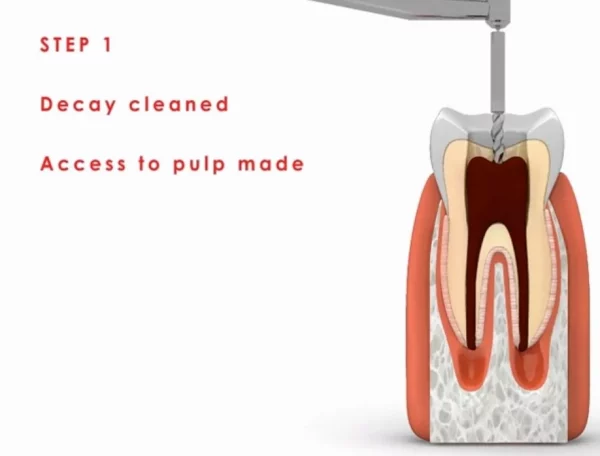
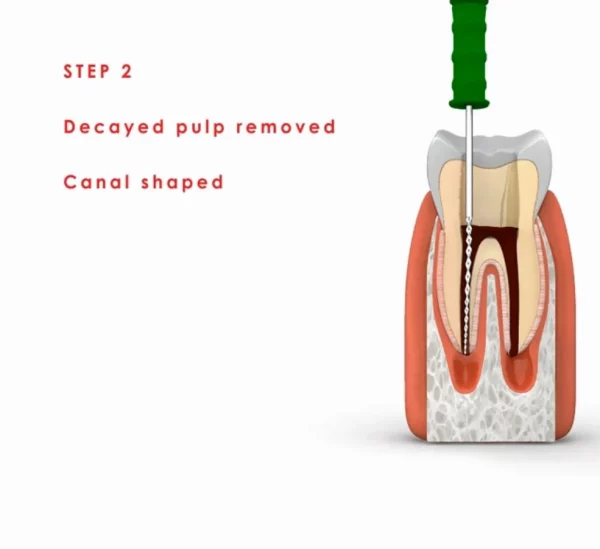


RCT treatment is necessary when the pulp, the soft tissue inside the root canal, becomes inflamed or infected. The inflammation or infection can have a variety of causes: deep decay, repeated dental procedures on the tooth, or a crack or chip in the tooth. In addition, an injury to a tooth may cause pulp damage even if the tooth has no visible chips or cracks. If pulp inflammation or infection is left untreated, it can cause pain or lead to an abscess.
Signs to look for include pain, prolonged sensitivity to heat or cold, tenderness to touch and chewing, discoloration of the tooth, and swelling, drainage and tenderness in the lymph nodes as well as nearby bone and gingival tissues. Sometimes, however, there are no symptoms.
Many RCT’s are performed to relieve the pain of toothaches caused by pulp inflammation or infection. With modern techniques and anesthetics, most patients report that they are comfortable during the procedure.
For the first few days after treatment, your tooth may feel sensitive, especially if there was pain or infection before the procedure. This discomfort can be relieved with over-the-counter or prescription medications. Follow your dentist’s instructions carefully.
Your tooth may continue to feel slightly different from your other teeth for some time after your RCT is completed. However, if you have severe pain or pressure or pain that lasts more than a few days, call your dentist.
The dentist removes the inflamed or infected pulp, carefully cleans and shapes the inside of the canal, a channel inside the root, then fills and seals the space. Afterwards, you will return to your dentist, who will place a crown or other restoration on the tooth to protect and restore it to full function. After restoration, the tooth continues to function like any other tooth.
The cost varies depending on how complex the problem is and which tooth is affected. Molars are more difficult to treat, the fee is usually more. Most dental insurance policies of corporates likes IOCL, NFL, panipat provide the reimbursement for the same. Generally, RCT and restoration of the natural tooth are less expensive than the alternative of having the tooth extracted. An extracted tooth must be replaced with a bridge or implant to restore chewing function and prevent adjacent teeth from shifting. These procedures tend to cost more than RCT and appropriate restoration. With root canal treatment you save your natural teeth and money.
Normally the charges range from 4000 -8000 per tooth for root canal and capping included. The range is according to the level of difficulty, materials used and the quality of cap placed.
You should not chew or bite on the treated tooth until you have had it restored by your dentist. The unrestored tooth is susceptible to fracture, so you should see your dentist for a full restoration as soon as possible. Otherwise, you need only practice good oral hygiene, including brushing, flossing, and regular checkups and cleanings.
Most RCT treated teeth last as long as other natural teeth. In a few cases, a tooth that has undergone RCT does not heal or the pain continues. Occasionally, the tooth may become painful or diseased months or even years after successful treatment. Often when this occurs, redoing the RCT can save the tooth.
If you are searching for painless root canal treatment in Panipat, book a consultation with our experienced dentist today.
